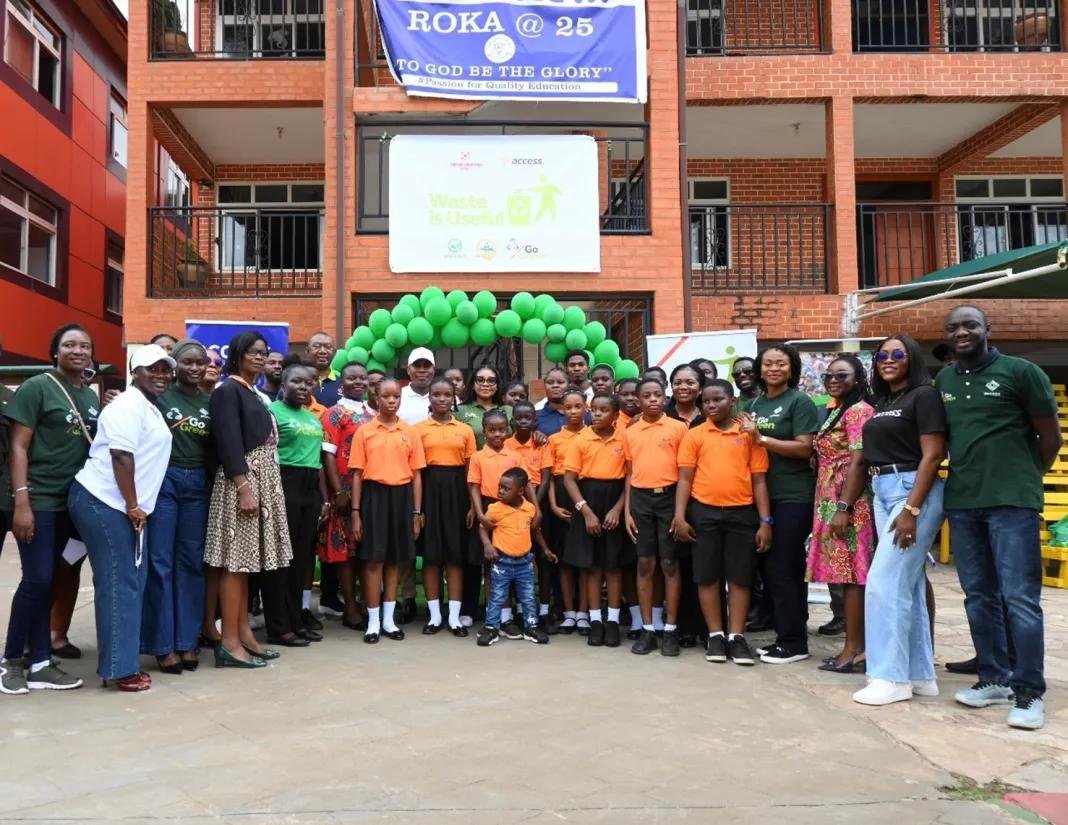

Access Bank (Ghana) Plc has launched the second phase of its ‘Waste is Useful’ project, aiming to educate over 150,000 students from 300 basic schools on recycling and sustainable resource use.
The initiative, implemented in Accra’s Ga North and Ga West Municipal Assemblies, addresses Ghana’s significant issue with single-use plastics, which are largely uncollected and end up in landfills or the ocean.
The project was inaugurated at ROKA International School in Amasaman, Accra. Over the next three months, students will receive training on proper waste management, special waste bins for clean waste collection, and opportunities to monetize the collected waste. The initiative is part of Access Bank’s broader commitment to environmental sustainability and is supported by the GoG Aid Foundation, the Environmental Protection Agency (EPA), and Namarco, a subsidiary of Zoomlion Ghana.
Matilda Asante-Asiedu, Group Head of Retail Banking at Access Bank, highlighted the importance of instilling recycling habits in children to foster a culture of sustainability. She emphasized that involving schools and youth is crucial for protecting and conserving the environment. The project aims to make students key players in promoting environmental responsibility and improving waste segregation practices.
The first phase of the ‘Waste is Useful’ project focused on internal waste segregation and reducing single-use plastics within the bank. Access Bank’s efforts align with SDG 12, promoting responsible consumption and production. With operations in 22 countries, the bank actively invests in initiatives that support environmental conservation, community development, and social well-being.
Access Bank has received numerous awards, including Most Innovative Bank for Community Engagement from the International Finance Awards in 2024 and Project of the Year, Environment from the Sustainability & Social Investment (SSI) Awards in 2023.

 By
By