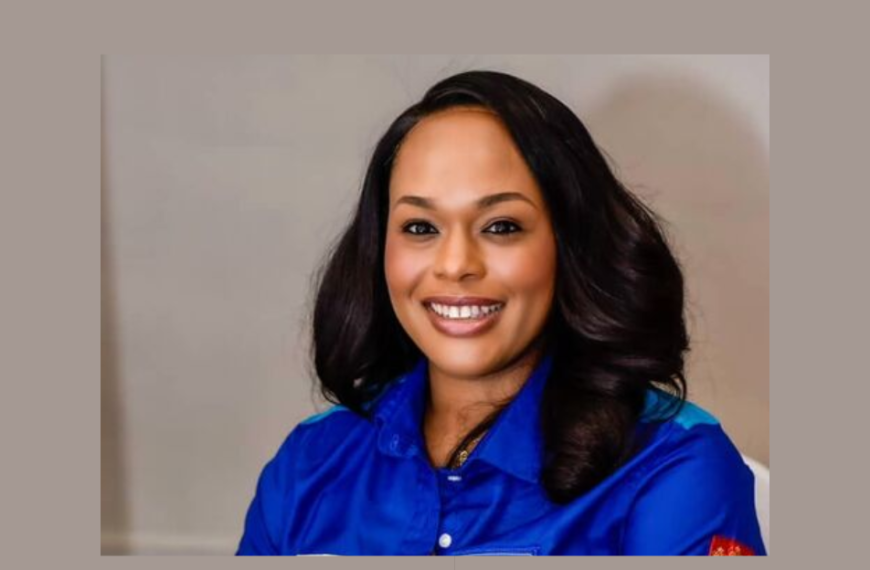


Su-lise Tessendorf-Louw, Chief Marketing Officer of Mr D Food, has challenged businesses to rethink their approach to brand transformation, arguing that companies do not always need to reposition or reinvent themselves to remain relevant and achieve growth.
According to Tessendorf-Louw, brands should first examine the strengths, consumer connections and distinctive identities they have already established before pursuing major changes in response to evolving markets, leadership transitions, technological developments or shifting consumer behaviour.
She argues that sustained brand growth depends on owning distinctive consumer truths, strengthening emotional connections and aligning creativity with business strategy.
Drawing on her experience across consumer insight, brand strategy, creative development, commercial marketing, telecommunications, fast-moving consumer goods, restaurants, retail and e-commerce, she believes that sustained brand growth often comes from deepening an existing brand promise rather than abandoning it for something new.
“Sometimes brands do need to change. Very often, the answer to growth isn’t reinvention. It is deeper ownership. It is identifying the most powerful truth your brand already has permission to own and finding ways for that truth to mean more, to more people, in more moments,” she said.
She noted that the constant pursuit of novelty could cause marketers to overlook valuable brand assets, including consumer memory, established meaning and distinctiveness built over several years.
Distinguishing movement from meaningful progress
Tessendorf-Louw observed that the marketing industry has developed a strong appetite for new strategies, platforms, technologies, campaigns and creative approaches. However, she maintained that the central challenge for marketing leaders remains how to keep brands relevant without weakening what they represent.
She said the rapid advancement of generative artificial intelligence has intensified the need for strategic clarity, as businesses can now produce more marketing content, variations and creative executions at unprecedented speed.
However, increased production capacity does not necessarily translate into stronger brand value, she argued, stressing that the real competitive advantage lies in knowing what deserves to be created.
In her view, human judgement, cultural understanding, a distinctive point of view and a clear brand idea remain essential to effective marketing.
“Creativity isn’t the decoration we apply after strategy. Creativity is one of the mechanisms through which strategy compounds,” she said.
ALSO READ: RENE MADUMERE TAKES ON SENIOR BRAND MANAGER ROLE AT HENNESSY, MOËT HENNESSY
AI raises the premium on distinctive creativity
The Mr D CMO further argued that brand distinctiveness will become increasingly important as artificial intelligence makes marketing production faster, more accessible and easier to replicate.
While AI is expected to accelerate content development, personalisation and creative iteration, she believes that access to similar production capabilities will make originality, cultural relevance and human insight even more valuable.
She pointed to Mr D’s “Done, Done, Done” musical refrain as an example of translating a strategic proposition into a recognisable creative identity that consumers can recall across different channels and everyday occasions.
The campaign’s creative direction also draws on recognisably South African voices, humour, family experiences and everyday situations to establish a stronger cultural connection with audiences.
“Local isn’t the opposite of scalable. Generic is,” she said.
She added that South African consumers are sophisticated enough to distinguish between brands that genuinely understand their cultural environment and those that merely borrow cultural expressions for marketing purposes.
In her assessment, authentic cultural relevance is built through specific language, familiar family dynamics, recognisable humour, music and everyday observations that resonate with people’s lived experiences.
Brand building and performance marketing must work together
Beyond brand positioning and creativity, Tessendorf-Louw called for marketing leaders to move beyond the perceived conflict between brand building and performance marketing.
Drawing on her experience across both disciplines, she described the separation as largely a false choice, arguing that the two functions deliver stronger results when integrated.
She explained that performance marketing plays an important role in capturing and converting demand through data, distribution, experimentation and measurable customer action. Brand building, meanwhile, creates memory, meaning and recognition, making it easier for consumers to identify and remember the businesses behind marketing messages.
She maintained that performance marketing becomes more effective when it has distinctive brand ideas to amplify, while consistent performance activity can help translate brand demand into measurable commercial outcomes.
According to her, a strong creative platform provides the connection between the two, allowing businesses to maintain consistency in brand communication while adapting their messages to different audiences, channels and customer needs.
Marketing leaders urged to examine existing brand strengths before repositioning
Tessendorf-Louw concluded that businesses experiencing growth, transformation or changing market conditions should resist the automatic impulse to reposition their brands.
Instead, she encouraged marketing leaders to examine what consumers already believe about their businesses, the distinctive value they have earned the right to represent and whether their existing brand propositions can accommodate future ambitions.
She acknowledged that some circumstances may require complete reinvention but cautioned against discarding valuable brand identities simply because new technologies, platforms or market opportunities make change possible.
For her, strong brands are built through the accumulation of distinctive ideas, customer experiences, memories and associations that become more valuable over time.
“Don’t reinvent something valuable simply because you can. Find the truth worth owning. And then go much, much deeper,” she said.
Source: Biz Community


 By